Bulldozer/Snowplow Parenting (Lawnmower Parenting)

Lawnmower parents are the latest generation of overbearing parents who are overly involved in their children’s lives. They continue to micromanage, interfere, and arrange. Their objective is to shield them from failure, disappointment, discomfort, and adversity. They may also harm their social and personal development.

Lawnmower parents, like the more well-known Helicopter Parents, are overly involved in their child’s life to protect them from disappointment or discomfort. While they may believe they are helping their child, lawnmower parents can have a negative impact on their child’s problem-solving skills, leaving them insecure and unable to deal with failure.

Let’s get to know Lawnmower Parents better now.

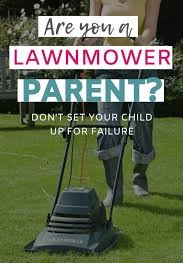
A lawnmower parent, named after the machine used to cut grass, will “mow down” any obstacles their child may encounter. Lawnmower parents rush forward to save the child from any inconvenience, problem, or discomfort.

This may appear to be similar to helicopter parenting. Helicopter parenting entails hovering or closely monitoring a child’s every move, whereas lawnmower parenting entails more intervention.

A lawnmower parent may:

  • Complete their child’s homework or projects.
  • Email teachers to debate grades.
  • Remove their child from potentially hazardous situations.
  • Others are to blame for their child’s mistakes.
  • Intervene in disputes between friends, teachers, coaches, and others.
  • Make unreasonable requests for their child’s accommodations.
  • Inquire with professors about grades or extensions.
  • Inquire with potential employers about interviews.

Lawnmower offspring are more likely to:

  • Inadequate communication skills.
  • Personal motivation and drive are lacking.
  • Inability to make decisions.
  • Lack of self-assurance.
  • Have heightened anxiety.

Because they do not want to see their child suffer or struggle, lawnmower parents may attempt to manage their child’s life. However, by removing obstacles and setbacks for their children, they may be negatively impacting their child’s development of life skills. Children of lawnmower parents may be self-conscious about their abilities or struggle to accept failure. When confronted with problems, they may panic or shut down. In the long run, a child raised by lawnmower parents may begin to interpret difficulties as personal failures, blaming themselves for setbacks. This can result in increased anxiety, a low tolerance for pain, and feelings of helplessness.

It instils in your child the belief that they are incapable of dealing with difficult situations. Unless you are there every step of the way, they will expect to fail rather than succeed.

The parents are doing everything possible to pave the way for their children. These parents don’t want their children to ever hit a wall, trip and fall, or get lost, so they’re constantly putting themselves out ahead, doing everything they can to ensure their children have the easiest journey possible.

These children are taught that they are not capable of doing things on their own. In some ways, the lawnmower parent implies to the child that they are unable to do it on their own.

Furthermore, children who are always served life on a silver platter with no indication of struggle are more likely to struggle when confronted with life’s ups, downs, twists, and turns. They are also less likely to recognise how fortunate they are.

Lawnmower parenting can have an impact on parents as well. When parents spend their time interfering, arranging, and negotiating on their child’s behalf, they may become overwhelmed and stressed. They may spend so much time on their child in an attempt to make their child’s life easier that they have little free time left. This can have physical and mental consequences for the parent, including depression, anxiety, tension headaches, ulcers, and high blood pressure.

The consequences for children can be severe. Children who are rarely or never faced with significant challenges, feel the sting of failure, or navigate a difficult journey are more likely to become less resilient, less confident, and more anxious. The only way to truly know if you can bounce back, stand strong, or muddle through is to have to do so in small and large ways over and over throughout your life. And if their parents are always one — or five — steps ahead of them, clearing the way, they’ll never get a chance to get up, dust themselves off, and get back in the game.

Our children must learn to deal with disappointment. They must learn that they will not always get what they want. They must understand that we will not always be present to fight their personal, academic, or professional battles.

Getting Over Lawnmower Parenting.

If you suspect you are a lawnmower parent, changing your parenting style can help you and your child become more independent.

Here are a few alternatives to lawnmower parenting.

Be truthful with your children.

While it is important to support your child, it is also critical to recognise when your child is in the wrong. Encourage your child on a regular basis and let them know that you believe in them to make good decisions now and in the future. Allow them to make mistakes, even big ones, and learn as a group from them. Sharing your knowledge and guiding your children is important, but you also want to be supportive. Just don’t step in and try to do everything for them.

Don’t try to solve problems.

When problems arise with your children, avoid getting involved right away. Whether it’s a major conflict at school or a minor disagreement with friends, it’s critical to give children the opportunity to work things out on their own before interfering. Allow your child to speak for himself. Whether it’s ordering a meal at a favorite restaurant, asking a store associate where something is, or speaking with a teacher to make up a missed assignment. Allow your child to express themselves verbally. Only after your child attempts communication on their own should you, if necessary, intervene. For example, if your child misplaces a friend’s school book, have him/her consult with the friend and the librarian before making a decision and dealing with the potential consequences.

Provide problem-solving strategies.

Moving away from lawnmower parenting does not preclude you from paying child support. When your child faces a challenge, seize the opportunity to impart wisdom and counsel. Ask them what they believe they can do to solve the problem and make suggestions. This allows them to rely on you as a parent while also teaching them to take responsibility for their actions and solve their own problems. Allowing your child to fall is an important part of their development. As difficult as it is to witness, it is when our child falls that they learn the most. This is when the wheels in their heads start turning, trying to figure out how to get back up or right their wrong.

Concentrate on your independence.

It is difficult to change parenting styles overnight, especially if you are used to being involved in your child’s daily life. Remind yourself that your ultimate goal is independence. Your child should be able to care for themselves rather than relying on you all the time. We want our children to be self-sufficient and not always rely on their parents. Our job as parents is to raise compassionate, hardworking, capable adults and then set them free.

However, there are times when getting involved in your child’s problems is both appropriate and beneficial.

If your child is being bullied, you may need to intervene. This could include speaking with school officials, requesting safety precautions, or removing your child from the situation if necessary.

Helping your child when things go wrong, such as bringing them their forgotten homework or giving them a ride when they miss the bus, isn’t always a bad thing. Every child will make mistakes, and it is critical to show your child that they can come to you for help. It only becomes a problem if you are constantly rescuing your child from their errors.

The more you remind yourself of this, the better you’ll be at ensuring they can survive on their own in this big, loud, crazy world.

Helicopter Parenting (Cosseting Parent)

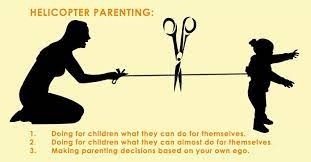
Helicopter parenting is a parenting style in which parents are overly focused on their children. They frequently take far too much responsibility for their children’s experiences, particularly their successes and failures. Over-parenting is simply helicopter parenting. It entails being involved in a child’s life in an excessively controlling, overprotective, and perfecting manner, in excess of responsible parenting.

Helicopter parenting is most commonly applied to parents who assist high school or college-aged students with tasks that they are capable of doing on their own (for instance, calling a professor about poor grades, arranging a class schedule, or managing exercise habits). However, helicopter parenting can occur at any age.

In toddlerhood, a helicopter parent may constantly hover over the child, playing with and directing his behaviour, leaving him with no alone time.

In elementary school, helicopter parents may work to ensure that their child has a specific teacher or coach, choose their child’s friends and activities, or provide excessive help with homework and school projects.

Helicopter parenting can occur for a variety of reasons, but there are some common triggers.

Fear of negative consequences. Parents may be concerned about their child’s rejection from a sports team or a failed job interview, especially if they believe they could have done more to assist. Many of the consequences (parents) are attempting to prevent unhappiness, struggle, not excelling, hard work, and no guaranteed results—are excellent teachers for children and are not life-threatening. That’s just how it feels.

Anxiety symptoms. Concerns about the economy, the job market, and the world in general can motivate parents to exert more control over their children’s lives in order to protect them. Worry can motivate parents to assert control in the hope that they will never hurt or disappoint their child.

Overcompensation. Adults who experienced unloved, neglect, or rejection as children may overcompensate with their children. Excessive attention and monitoring are sometimes used to compensate for the parents’ shortcomings in their upbringing.

Other parents’ peer pressure. When parents observe other overly involved parents, they may experience a similar reaction. When we see other parents over-parenting or being helicopter parents, it can put pressure on us to do the same. We can easily believe that if we do not actively participate in our children’s lives, we are bad parents. Guilt plays a significant role in this dynamic.

The Downsides of Helicopter Parenting.

Many helicopter parents begin with the best of intentions. It’s a fine line to walk between being engaged with our children and their lives and losing sight of what they require.

A child can benefit from engaged parenting in many ways, including feelings of love and acceptance, increased self-confidence, and opportunities to grow. However, once parenting becomes governed by fear and decisions based on what might happen, it’s difficult to remember everything kids learn when we are not guiding each step. Failure and challenges teach children new skills and, most importantly, teach them that they are capable of dealing with failure and challenges.

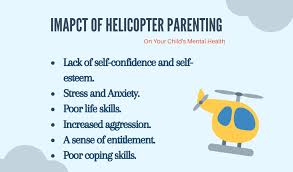
The consequences of helicopter parenting are numerous, but they may include the following:

Reduced self-esteem and confidence.

The primary disadvantage of helicopter parenting is that it backfires. The underlying message that (the parent’s) over-involvement sends to children is that “my parent does not trust me to do this on my own.” This message, in turn, creates a sense of insecurity.

Undeveloped coping abilities.

How does a child learn to cope with disappointment, loss, or failure if the parent is always there to clean up their child’s mess or prevent the problem from occurring in the first place? As a result, helicopter parenting can result in unhealthy behaviors.

Overly controlling parents can impair their child’s ability to regulate emotions and behaviour. Children who had helicopter parenting had an inflated sense of self and were impulsive.

Anxiety has increased.

Overparenting is linked to higher levels of anxiety and depression in children. Helicopter parenting is also associated with lower emotional, decision-making, and academic functioning.

Feeling of entitlement.

Children who have always had their social, academic, and athletic lives adjusted by their parents may develop a sense of entitlement as a result of this.

Inadequate life skills.

Parents who always tie their children’s shoes, clear their plates, pack their lunches, launder their clothes, and monitor their children’s school progress, even after they are mentally and physically capable of doing so, prevent their children from mastering these skills.

We have a difficult job as parents. We must keep one eye on our children—their stressors, strengths, and emotions—while also keeping one eye on the adults we are attempting to raise. Getting them from here to there involves some pain, both for our children and for us.

In practice, this means allowing children to struggle, being disappointed, and assisting them in working through failure. It also entails allowing your children to complete tasks that they are physically and mentally capable of.

Remembering to look for opportunities to step back from solving our child’s problems will help us raise resilient, self-assured children.

Our parents are always with us, no matter how far we have come.

Authoritative Parenting (Democratic Parenting)

A child-rearing approach characterized by high responsiveness and high expectations is known as an authoritative parenting style. Authoritarian parents are warm and responsive to their child’s emotional needs while maintaining high expectations for the child. They set boundaries and are very consistent in enforcing them.

The best parenting style is authoritative parenting. In general, this parenting style produces the best results in children. This approach is common in educated, middle-class families and has been linked to better child outcomes around the world.

Children of powerful parents:

  • Content and happy.
  • Are self-sufficient and independent.
  • Possess strong emotional regulation and self-control.
  • Possess competent social skills.
  • Exhibit upbeat attitudes and high levels of warmth.
  • Improve your academic performance.
  • Improve your self-esteem.
  • Improve your mental health by reducing your depression, anxiety, suicide attempts, delinquency, alcohol and drug use.

Parents with authority:

  • Are warm, sensitive, and nurturing.
  • Pay attention to the children.
  • Allow for autonomy while encouraging independence.
  • Instead of demanding blind obedience, reason with children.
  • Establish clear ground rules for appropriate behaviour.
  • Maintain consistent boundaries.
  • Instead of punitive, forceful measures to discipline, use positive discipline or reasoning.
  • Children should be respected, not demanded.

Is Authoritarian Parenting Appropriate For Every Child?

It has been discovered that authoritative parenting styles benefit children of various temperaments. In fact, children with difficult temperaments benefit more from authoritative child-rearing than children with easy temperaments.

However, because every child is unique, different parenting styles are required.

Styles of authority: authoritative vs. authoritarian.

These traits contrast with the authoritarian parenting style, which is characterized by extremely high expectations with little warmth and guidance.

Consider the following scenario: two young boys steal candy from the grocery store. The differences between these parenting styles are characterized by how each boy’s parents deal with the situation.

Authoritative Parents.

When the boy with authoritative parents returns home, he is given a fair punishment that is appropriate for the nature of the transgression. Here’s an example of authoritative parenting in this situation:

  • He is barred from leaving the house for two weeks and is required to return the candy and apologise to the store owner.
  • His parents explain to him why stealing is wrong.
  • His parents are supportive and encourage him not to repeat the behaviour.

Authoritarian Parent.

Because the other boy has authoritarian parents, his outcomes are quite different. In this situation, here’s an example of authoritarian parenting:

  • When he gets home, both parents yell at him.
  • He is spanked by his father.
  • His father orders him to stay in his room for the rest of the night without eating.

The child of authoritarian parents was disciplined, but with encouragement and support to encourage desired future behaviour. The child raised by authoritarian parents, on the other hand, received no support or love, as well as no feedback or guidance on why the theft was wrong.

Children are unique.

Different children require different parenting styles based on their “Goodness of Fit.” The child will thrive when there is a good fit between the child’s temperament and the parents’ personalities, attitudes, and parenting practices.

However, when there is a lack of fit, the child suffers. There is a distinction between parenting style and parenting practice.

The emotional climate in which parents raise their children is referred to as parenting style.

A parenting practice is a specific action that parents use to parent.

The authoritative parenting style is the most effective. Parents should use the same authoritative parenting style, but with different parenting practices based on their child’s temperament. Authoritarian parenting is not a set of rigid parenting techniques.

Authoritarian parenting encompasses a wide range of parenting techniques, all based on the same “high responsiveness, high demandingness” principle.

An example of an authoritarian parenting style is being warm, accepting, and supportive.

Hugging, cheering, and smiling are all examples of parenting practices.

Another example of an authoritarian parenting style: high standards and limits.

Different parenting practices include requiring a child to do chores, get good grades, and show manners.

What Makes Authoritarian Parenting Style the Best.

Authoritarian parents are aware of, nurture, sensitive to, and supportive of their children’s emotional and developmental needs. Children who have responsive parents are more likely to form a secure attachment. Children who have a secure attachment are less likely to develop internalizing problems. Infants raised by responsive mothers have better problem-solving abilities, cognitive competence, and emotional control.

Emotional regulation is the foundation for a child’s success. Parental responsiveness and autonomy support appear to give children the opportunity to develop good self-regulation skills.

Parents who are authoritative are supportive. They are more likely to be involved in a child’s education by volunteering or monitoring homework. Adolescent academic achievement has been shown to benefit from parental involvement.

Authoritarian parents are also open-minded and collaborative. They foster individuality through open communication, explanations, and reasoning. These parents are demonstrating prosocial behaviour that their children can emulate. These children develop strong social skills as they grow.

The high expectations of authoritative parents keep children in check.

Authoritarian parents are remarkably consistent when it comes to enforcing limits. One of the most important aspects of a successful home discipline is consistency. Children who have consistent parental discipline have fewer internalizing and externalizing problems.

Although authoritative parents have high standards, they do not use punitive punishment to discipline their children. Non-punitive discipline has been shown to increase children’s honesty and reduce aggressive behaviour. Inductive discipline is used by authoritative parents to teach proper behaviour. When it comes to discipline, they are firm but gentle. They are strict, but they are not cruel.

Authoritarian parenting strikes a balance between excessive psychological control (authoritarian) and insufficient behavioral control (permissive). To achieve the best positive outcomes, it is in the middle of two extreme styles.

Why It Is Effective.

Authoritarian parents serve as role models by modelling the behaviors they expect from their children. As a result, their children are more likely to internalize and exhibit these behaviors. Consistent rules and discipline also provide children with a sense of security.

These parents have strong emotional understanding and control. Their children learn to control their emotions and to understand others.

Authoritarian parents also allow their children to act on their own. This independence teaches children that they are capable of accomplishing things on their own, which aids in the development of strong self-esteem and self-confidence.

Some parents are more authoritative by nature than authoritarian or permissive. This does not preclude you from adopting a more authoritative style, even if it is not your natural default.

Trying to moderate your parenting style may require you to be aware of your actions as you work to develop the habits of an authoritative parenting style.

If you want to become a more authoritative parent, there are some things you can do to help. This parenting style can be viewed as a balance of discipline, emotional control, and allowing independence.

Try not to be too harsh or too lenient; you can begin by allowing your child to make more decisions while also having regular discussions about those decisions.

This parenting method will become more natural with time, attention, and flexibility to your child’s needs.

What effect does authoritative parenting have on a child?

As they provide clear, firm, and consistent guidelines, parents in this category tend to develop close, nurturing relationships with their children. Children in this category are responsible, capable of controlling their aggression, have high self-esteem, and are extremely self-assured.

To implement an authoritative parenting style, parents should do the following:

  • Demonstrate to their children that they care.
  • Recognize and reward positive behaviour and accomplishments.
  • Set clear and reasonable expectations.
  • Pay attention to their children.
  • Maintain consistency.
  • Discipline is achieved through the use of options and consequences.
  • Take into account their children’s opinions.
  • Show affection and express your feelings by saying, “I love you.”
  • Give children the opportunity to make choices.

Parenting is one of the most difficult tasks that most adults will face in their lives. It can also be one of life’s most rewarding experiences. All parents want their children to grow up to be happy and well-adjusted adults. To achieve the best results, parents should incorporate acceptance, firmness, and autonomy encouragement into their parenting practices.

Parenting with Authority (Disciplinarian Parenting)

Do you constantly pressure your child to behave in a certain way? Forcing them to participate in sports or extracurricular activities? Do you realise that this parenting style can be more harmful than beneficial? One of the negative parenting practises is authoritarian parenting, also known as disciplinarian parenting. It not only stunts a child’s development, but it also has serious psychological consequences in adulthood.

This is a parenting style in which the parents enforce strict rules and high discipline, as the name implies.

They also exercise a great deal of control over their children and do not allow them to express themselves.

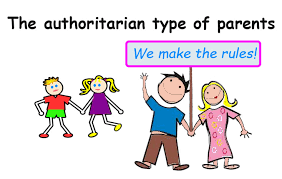
Authoritarian parents do not give their children many liberties. Instead, punishments and rewards are used as the primary form of discipline. Physical punishment and emotional coldness are both common characteristics. They are also very controlling, making decisions for their children rather than asking them what they want or think. Despite the fact that there are far better ways to raise children to be responsible adults, they only use control. They are frequently associated with low parental warmth, high parental hostility, and poor emotional responsiveness to their children. It also includes strict control over the child’s activities, intense cognitive stimulation at home, and harsh punishments and disciplinary strategies. These uninvolved parents may substitute tuition or classes for playtime in order to push their child to be an achiever.

This strict parenting style is intended to produce obedient adults who are always respectful of authority figures. This, unfortunately, is not the case.

Yelling is extremely common. Authoritarian parents punish their children for their mistakes while ignoring their accomplishments. They anticipate that the child will not make mistakes and will obey them. Their children, on the other hand, are usually good at following rules.

When a parent expects their child to follow instructions and obey orders because “they said so,” this is an example of authoritative parenting. The parents will never solicit the child’s opinion or consider the child’s choices.

Parental Authority.

One of the most important aspects of parenting is exposing your children to the values and expectations of your culture. However, if you are an authoritarian parent, you may have expectations of your child that are diametrically opposed to what your child desires.

The Impact of Authoritarian Parenting on Children.

A variety of child outcomes, including social skills and academic performance, have been linked to parenting styles. Authoritarian parenting has more negative than positive consequences. The following are the negative consequences:

  • Self-esteem is low. While rewarding good behaviour helps to reinforce discipline, criticising the child causes them to doubt their own worth and potential. Failure to recognise a child’s accomplishments may also contribute to low self-esteem.
  • Difficulty in social situations as a result of a lack of social skills. It is critical for children to develop social skills while they are young. If your child does not have time to socialise, they may find it difficult to relate to others even as adults.
  • Outside of the home, children may exhibit aggressive behaviour. Harshness, physical punishment, and exerting too much control over children result in negative behaviour. Punishment is ineffective when compared to discipline. Violence always leads to more violence.
  • They are unable to accept failure. Children are under pressure to perform when it is made clear that they must always get it right. If your child’s behaviour is motivated by a desire to avoid punishment at all costs, you may need to alter your parenting style. This makes them fear failure rather than viewing it as an opportunity to learn and improve.
  • Your child easily conforms but also suffers from anxiety. When a child does not do what you want them to do, they frequently become angry, frustrated, and loud. In children, this type of behaviour causes anxiety.

Children raised by authoritarian parents are more likely to have poor decision-making skills and low self-esteem, poor social skills and academic competence, low creativity, and mental health issues such as depression and behavioural issues, fear of failure, emotional suppression, and difficulty dealing with negative situations.

Although authoritarian parenting has been linked to negative outcomes, there are some potential benefits. They are as follows:

Children develop the desire to do things correctly. Children will always want to do good because of constant nagging and reinforcement from their parents. It could be due to a fear of punishment or being conditioned to act in a certain way.

Parents raise children who are more responsible. Children rarely consider doing wrong because they are accustomed to following rules. The habit becomes so strong that it lasts into adulthood.

Children may grow up to be more goal-oriented. Authoritarian parents set strict rules and expect their children to follow them. As a result, their children are more likely to be focused on everything they do, resulting in them giving their all.

Regardless of any perceived benefits of authoritarian parenting, being accommodating with your children is far preferable. Admitting that you don’t know everything there is to know about parenting is the first step toward change. Getting as much information as possible about how to raise a child correctly will help you become a better parent.

Here are a few pointers to help you with your parenting style:

You’re fed up with misbehaviour. You may not expect your children to engage in undesirable behaviour if you are an authoritarian parent. You are finding it difficult to maintain a tolerant relationship with your child. You may lack the patience to explain to your children why they should avoid certain behaviours because you believe you know better. Instead, you expend little or no energy considering your child’s point of view.

Pay attention to your child. Authoritarian parents believe that children should be seen rather than heard. Be a good listener whether your child is telling you the same joke for the tenth time or sharing a long-winded story. Giving your child positive attention can help prevent behavioural issues.

Validate Your Child’s Feelings. Children can be truant at times, but that does not give you the right to become cold, unfriendly, and harsh towards them. Rather than yelling at them, provide your children with the encouragement and praise they require to develop self-esteem and self-worth.

So, the next time your child is upset, resist the urge to minimise their feelings by saying things like, “It’s not a big deal,” or “Stop crying.” There’s no need to be upset.” It could be a big deal to them. “I know you’re really sad right now,” you can validate their feelings.

Not emotions, but correct behaviour. Tell your child that it’s okay to be angry, but that hitting will result in consequences. It’s fine to be excited, but running around the grocery store is not. Then devote your efforts to teaching them appropriate ways to deal with their emotions.

Take into account your child’s emotions. An authoritarian parent does not empathise with or express feelings for their children. It communicates insensitivity and lack of concern if you make no effort to entertain or understand your child’s emotions. Being such a parent will instil in your children the practise of treating others without regard for how they feel.

Parents expect their children to obey without question and to not disagree with what they say or do. Authoritarian parents typically have one overarching goal: to have their children behave in accordance with their expectations, with no input from their children’s opinions.

Demonstrate to your child that you are in charge, but make it clear that you are concerned about how your decisions will affect everyone in the family.

So, if you’re planning a cross-country move, ask your children how they feel about it, but don’t ask them if it’s OK if you do. Children lack the maturity and experience to make important adult decisions. They feel more secure when they know adults are in charge.

Establish firm ground rules. Instead of saying, “Go to sleep because I said so,” say, “Go to sleep so your body and brain can grow.”

Your child will develop a better understanding of life when they understand the underlying safety concerns, health hazards, moral issues, or social reasons for your rules. They are also more likely to follow the rules if you are not present to enforce them.

Provide a single warning for minor issues. So, don’t waste time saying things like, “Knock it off,” or “Don’t make me tell you again!” Instead, say something like, “If you don’t stop banging your fork on the table right now, you won’t be able to play video games today,” or “If you don’t pick up your toys right now, you won’t be able to go to the park after lunch.”

Demonstrate to your child that you say what you mean and mean what you say. If they do not heed your warning, proceed with the consequences.

Use Life-Long Learning Consequences. Are you the type of parent who doubts your children’s ability to make good decisions? If so, it’s time to reconsider your parenting style. Children raised by authoritarian parents do not have the freedom to demonstrate that they are capable of good behaviour. When you constantly monitor a child to ensure they don’t make mistakes, you limit their ability to make decisions on their own. As a result, your child is deprived of the opportunity to learn valuable life lessons from the natural consequences of their actions.

Consequences are frequently logical. As a result, a child who refuses to turn off their video game may be denied access to video games for 24 hours.

Create consequences to teach your child to do better in the future. Don’t spank them if they hit their sibling. Instead, revoke a privilege. Then, concentrate on teaching better anger management and conflict resolution techniques.

“What can you do the next time you’re upset to avoid hitting?” Then, discuss alternatives to hitting and teach them.

Make the consequences time-sensitive as well. Instead of saying, “You can have your tablet back when I can trust you again,” say, “You can use your tablet again once you can demonstrate your responsibility.” You can demonstrate your responsibility by completing your chores and completing your homework on time every day this week.”

Provide incentives. They use incentives to help a child get back on track when he or she is struggling with a specific behaviour problem. As an example:

A young child refuses to sleep in his own bed. His parents make a sticker chart for him, and he gets one sticker for each night he sleeps in his own bed.

In the morning, a 10-year-old is slow to get ready for school. Every morning, her parents set a timer. She earns the right to use her electronics that day if she is ready before the timer goes off.

A 12-year-old has been forgetting to bring his school assignments home. His parents begin to keep a closer eye on his work. He receives a token for each assignment he brings home. Tokens can be exchanged for larger rewards such as a trip to the park or the chance to invite a friend over. Consider using rewards to teach your child new skills. A simple reward system is a quick and effective way to modify your child’s behaviour.

Allow Your Child to Make Minor Decisions. So, “Do you want peas or corn?” ask your child. Alternatively, “Would you like to clean your room before or after dinner?” The key is to ensure that you can live with either option.

Balance your freedom with your responsibilities. As an example:

A child frequently forgets to pack everything he needs for school. His parents make him a checklist. They ask him to go through the checklist before leaving the house in the morning.

A child has difficulty getting ready for school on time. His parents make a schedule for him to remember when he should get dressed, eat breakfast, and brush his teeth. They remind him to check the time and stick to his plans.

Create a behaviour management plan to support your child’s efforts to become more independent if he or she is having difficulty with something. Provide extra assistance at first, but make sure your child does not become overly reliant on you to tell them what to do. They should become more self-sufficient over time.

Make Mistakes Into Learning Experiences. So, when your child makes a mistake, explain why it was a bad decision. “Taking things that don’t belong to you is wrong,” you say. It hurts other people’s feelings and gives the impression that you are mean or don’t tell the truth.”

When your child causes harm to another person, assist them in making amends. After hitting, insist on them lending their favourite toy to their sister. Alternatively, assist them in apologising to someone they have offended.

If your child is a repeat offender, work together to solve the problem. “This is the second time you’ve missed the bus this month,” you say. “How do you think you’ll get to the bus stop on time?”

Encourage self-control. Don’t try to comfort your child every time they are upset. Instead, teach them relaxation techniques. Also, don’t nag your child about doing their chores. Assist them in becoming more responsible for completing their work on their own.

Create a behaviour management strategy centred on teaching life skills. They will benefit from impulse control, anger management, and self-discipline throughout their lives.

Keep a Positive Relationship With Your Child. Authoritarian parents are friendly and caring. They show affection and understand the importance of nurturing children.

Set aside a few minutes every day to give your child your undivided attention, even on bad days. Spending quality time with your child will help them feel loved and accepted, which is essential for them to feel confident in who they are and what they are capable of accomplishing.

Your children will become who you are; therefore, be the person you want them to be.

Parenting with Permission (Indulgent Parenting).

Permissive parenting is also referred to as indulgent parenting. Permissive parenting is a parenting style distinguished by low demands and high responsiveness. Permissive parents are typically very loving, but they provide few guidelines and rules. When parents are less bossy and punitive and more focused on shaping good behaviour through reasoning and positive emotions, children thrive. Permissive parents are friendly and responsive, which is a good thing. Secure attachment relationships are fostered by affectionate, responsive parenting. These parents do not expect mature behaviour from their children and frequently appear to be more of a friend than a parent. Permissive parents are extremely lax and rarely set or enforce rules or structure. Their catchphrase is frequently “kids will be kids.” While they are usually warm and loving, they make little or no effort to control or discipline their children. As a result of the lack of rules, expectations, and demands, children raised by permissive parents struggle with self-regulation and self-control.

Permissive parents do not regulate or control their children’s behaviour. As a result, their children are less aware of the boundaries of acceptable behaviour. They also have poorer impulse control and more behavioral issues.

Permissive parenting is also referred to as indulgent parenting. Parents with this parenting style place few demands on their children. Discipline is uncommon because these parents have low expectations for self-control and maturity. Permissive parents are more responsive than demanding parents. They are unconventional and lenient, do not require mature behaviour, allow for significant self-regulation, and avoid confrontation.

Parents who are permissive:

  • They are usually very nurturing and loving to their children.
  • When making major decisions, parents should consult with their children.
  • Parents should emphasize their children’s freedom rather than their responsibility.
  • Bribery, such as toys, gifts, and food, may be used to get a child to behave.
  • Often appear more like a friend than a parent.
  • Provide little in the way of structure or a schedule.
  • Consequences are rarely enforced.
  • Are aware of their children’s needs.
  • Are lenient and excessively lax. They despise having power and authority over their children. They do not supervise or direct their children’s behaviour. They have few rules and expectations of their behaviour. There are rules, but they are not consistently followed.
  • Allow children to make major decisions that are normally reserved for adult guardians without supervision.

Permissive parents’ overly relaxed approach to parenting can have a number of negative consequences. Children raised by permissive parents lack self-discipline, have poor social skills, may be self-involved and demanding, and may feel insecure as a result of a lack of boundaries and guidance.

The children of permissive parents:

  • Permissive parents fail to monitor their children’s study habits. As a result, their children have less self-control. Permissive parents do not expect their children to perform or set goals for them to strive for. Academic achievement is lower in the children of permissive parents. Because their parents do not enforce any rules or guidelines, these children struggle to develop good problem-solving and decision-making skills.
  • Children of permissive parents are more likely to be associated with criminal activity, substance abuse, and alcohol-related issues because they have poor impulse control.
  • Permissive parents do not control or regulate their children’s behaviour. They exhibit more aggression and less emotional understanding. As a result, their children are less aware of the boundaries of acceptable behaviour. They also have poorer impulse control and more behavioral issues, especially when they do not get what they want. When confronted with a stressful situation, they are more likely to resort to aggression.
  • These children never learn limits because their homes lack structure and rules. This could result in excessive television viewing, computer gaming, and overeating. These children never learn to limit their screen time or eating habits, which can lead to obesity and unhealthy habits.

Because permissive parenting involves a lack of demands and expectations, children raised by this style of parenting tend to lack a strong sense of self-discipline. They may be more disruptive in school as a result of a lack of boundaries at home, and they may be less academically motivated than many of their peers.

Children may lack social skills if their parents have few expectations for mature behaviour. They may be good at interpersonal communication, but they lack important skills like sharing.

Switching Your Permissive Parenting Style.

If you tend to be a pushover or struggle to enforce rules, think about how you can develop more authoritative parenting habits. This can be difficult at times because it frequently entails becoming stricter, enforcing rules, and dealing with your child’s upset.

Consider the following strategies:

  1. Make a list of basic house rules. Your children must clearly understand your expectations in order to understand how they should behave.
  2. Carry it out. This can be the most difficult for permissive parents, but it is essential. Try to be firm and consistent while remaining loving. Provide adequate feedback and explanations to your children to help them understand why such rules are important, while still ensuring that consequences are in place.
  3. Make sure your children understand the consequences of breaking the rules. Guidelines are meaningless unless there is some sort of penalty for not following them. Time-outs and loss of privileges are logical consequences for breaking the rules of the household.
  4. Reward appropriate behaviour. Try to catch your children being good and give them special privileges when they do.

A Word from the Pros.

Permissive parenting can lead to a variety of issues, so it’s important to consciously try to use a more authoritative approach if you notice these signs in your own parenting.

If you are a more permissive parent, consider how you can help your children understand your expectations and guidelines while also being consistent in your enforcement of these rules. You can ensure that your children grow up with the skills they need to succeed in life by providing them with the right balance of structure and support.

What To Do If Your Parent Is Permissive.

Permissive indulgent parenting can result in a variety of negative outcomes in children.

Here are some strategies to help you get things back on track.

  1. Declare it. Inform your children (and spouse / co-parent) that you will begin using an authoritative parenting style. Assure them that you will continue to be warm and responsive to their needs, but that there will be rules and limits that you will enforce.
  2. Make rules with the children. Hold a family meeting to determine which rules are required. Inquire about their thoughts and weigh the pros and cons. However, you have the final say.
  3. Determine the ramifications of rule violations. There must be clear and reasonable consequences for children who break the rules. Remember to use natural consequences to discipline your children (not to punish).
  4. Carry it out. This is where many permissive parents fail when attempting to break their permissive habits. It can be difficult not only for your children, but also for you, if you are used to being the “nice” parent.

That is yet another reason why using natural consequences is critical. You don’t have to be cruel or the “bad” guy. You are simply modelling new behaviour for your children by allowing them to experience the natural consequence. The goal is to educate, not to punish.

Remember that one of the most important aspects of authoritative parenting that allows for the best outcomes in your children’s upbringing is consistency.

What Should You Do If Your Spouse / Co-Parent Is Permissive?

It is ideal to have two authoritative parents.

However, we cannot always rely on others to change.

If you’ve tried but failed to change your partner, the best thing you can do for your child is to maintain authoritative parenting habits yourself. Children fare better if at least one parent uses authoritative discipline rather than none.

Parenting Without Involvement (Neglectful Parenting)

Because no two parents are alike, it should come as no surprise that there are numerous parenting styles. Still not sure what yours is? Don’t be concerned. Some people know exactly how they want to raise their children when they become parents. However, parenting styles can evolve on their own.

Let’s talk about Uninvolved Parenting today:

Uninvolved parenting, also known as neglectful parenting, has more negative connotations and is a parenting style in which parents do not respond to their child’s needs or desires beyond the basics of food, clothing, and shelter.

Uninvolved parenting is characterized by the absence of responsiveness and demandingness.

These uninvolved parents are uninterested in their child’s life. They do not meet their child’s needs, whether they are physical or emotional. They do not also set limits or discipline their children.

Children raised by uninvolved parents receive little nurturing and guidance from their parents. They are essentially left to fend for themselves.

Parenting styles are generally classified into four broad categories:

  • Authoritarian.
  • Authoritative.
  • Permissive.
  • Uninvolved.

Uninvolved parenting is the newest of the four to be classified, but that doesn’t mean it’s new. It’s an intriguing parenting style because it involves much less hand-holding than other parenting styles.

Their parents provide little guidance, discipline, and nurturing to these children. And too often, children are left to raise themselves and make big and small decisions on their own.

It’s a contentious parenting style, and as a result, it’s easy to pass judgement on these parents. But whether you’re an uninvolved parent or know someone who is, keep in mind that this parenting style isn’t always deliberate.

The reasons why some parents choose to raise their children in this manner vary.

Uninvolved parenting symptoms and characteristics:

Many parents can relate to feeling stressed, overworked, and exhausted. When things get out of hand, you may brush off your child for a few minutes of peace and quiet.

As guilty as you may feel afterwards, these aren’t typical of uninvolved parenting. Uninvolved parenting is more than just being preoccupied with oneself. It’s more of an ongoing pattern of emotional distance between parent and child.

Indifferent parenting is uninvolved parenting.

Neglectful parents are at the opposite end of the responsive spectrum as permissive parents.

Authoritarian parents who have high expectations for their children to meet are the polar opposite of uninvolved parents in terms of demands.

Negligent parenting:

  • Show no affection or warmth toward their children.
  • Act indifferently and distantly. They do not assist or provide for their children’s basic needs.
  • Provide no emotional support, such as belonging or encouragement.
  • Parents should not impose rules, boundaries, or expectations on their children’s behaviour. You should also not monitor or supervise them.
  • They are uninterested in their child’s schoolwork, activities, or performance.
  • Do not participate in their children’s lives in general.

The following are signs of an uninvolved parent:

1. Concentrate on your own issues and desires.

Uninvolved parents are preoccupied with their own affairs, whether it’s work, a social life apart from the kids, or other interests or problems, to the point where they’re unresponsive to the needs of their children and make little time for them.

Everything else takes a back seat to the children. In some cases, parents may completely neglect or reject their children.

Again, it’s not always a choice between a night at the club and family game night. Sometimes issues arise that appear to be beyond a parent’s control.

2. Absence of emotional attachment.

Many people have a natural emotional connection with their children. This bond, however, is not instinctual or automatic in the case of uninvolved parenting. The parent experiences a disconnect, limiting the amount of affection and nurturing they can give to their child.

3. Disinterest in the child’s activities.

Uninvolved parents are uninterested in their child’s schoolwork, activities, or events due to a lack of affection. They may miss sports games or fail to attend PTA meetings.

4. There are no established rules or behavioural expectations.

Discipline is typically lacking in uninvolved parents. As a result, unless a child’s behaviour affects them, these parents rarely offer any type of correction. They let the child do whatever they want. And these parents are unconcerned when their child does poorly in school or in other activities.

Neglectful parents frequently come from dysfunctional families and experienced neglectful or uninvolved parenting as children. Uninvolved parents frequently suffer from mental health issues such as anxiety, depression, and alcoholism.

What effects does uninvolved parenting have on children?

Uninvolved parenting is the worst parenting style of the four because children raised with this parenting style fares the worst.

Neglectful parenting can have a negative impact on a child’s development and well-being. It can have the following negative effects on a young child:

  • More impulsive and lacking in self-control.
  • Underachievement in school
  • Less ability to regulate one’s emotions.
  • Inadequate social skills.
  • Self-esteem is low.
  • Increased risk of mood disorders like depression.
  • Borderline Personality Disorder is more likely to develop.

Busy parents are not necessarily neglectful parents. Some parents who work long hours will inevitably have less time for their children. They may, however, remain friendly and caring. They can still show interest in their children’s lives and form emotional bonds when they spend time together, even if it isn’t on a regular basis. When it comes to developing a healthy parent-child relationship, quality trumps quantity.

Negligent parenting is a bad parenting style. Uninvolved parents are uncaring parents who do not care about their children’s well-being.

They are more than just working parents. Uninvolved parents are busy parents who lack involvement because they don’t care.

However, busy parents who lack time for involvement are simply bad time managers.

In this case, being unable to become involved in a child’s life does not imply a desire to become involved in a child’s life.

To thrive, children require love, attention, and encouragement. As a result, it’s not surprising that uninvolved parenting can be harmful to a child.

It is true that children raised by uninvolved parents learn self-reliance and how to meet their basic needs at a young age. Nonetheless, the disadvantages of this parenting style outweigh the benefits.

One significant disadvantage of uninvolved parenting is that these children do not form an emotional bond with their uninvolved parent. Early lack of affection and attention can lead to low self-esteem or emotional neediness in other relationships.

A child’s social skills may suffer as a result of having an uninvolved parent. Because uninvolved parents rarely communicate or engage their children, some children may struggle with social interactions outside the home.

Because parenting styles differ across cultures, the outcomes may differ. Regardless of where they live, children of neglectful parents face more challenges.

Children of uninvolved parents may lack coping skills as well.

When a child develops an emotional distance from their parent, they may replicate this parenting style with their own children. As a result, they may have a similar strained relationship with their own children.

Uninvolved parenting examples:

Depending on the age of the child, uninvolved parenting can take many forms.

Consider the case of an infant. While some parents take advantage of every opportunity to nurture and affectionate their child, an uninvolved parent may feel disengaged or detached from their child.

They may have no desire to hold, feed, or play with the baby. If given the chance, they may give the baby to their partner or a grandparent.

Detachment can be a short-term symptom of postpartum depression rather than a philosophical, life-long parenting choice or style. That is why, if you have postpartum depression, you should seek treatment from your doctor.

However, in the absence of this condition, other factors come into play. A parent, for example,

may feel disconnected if they did not have a bond with their own parents.

In the case of a young child, an uninvolved parent may show little interest in the artwork created by their child, or they may ignore the child while excitably discussing their day.

They may also fail to establish reasonable boundaries, such as bedtimes. In contrast, an authoritative parent listens to their child and encourages open communication while also setting limits when necessary.

If an older child skips school or brings home a poor report card, an uninvolved parent may not impose any consequences, or even react or care. This is in contrast to an authoritarian parent, who is strict and will punish a child who deviates from the rules.

It’s worth noting that uninvolved parenting isn’t usually a conscious decision. It happens for a variety of reasons. It can happen when a parent is overburdened with work and has little time or energy to devote to their child. This can cause a schism in their relationship, causing them to become estranged from one another.

However, this style can develop when a person has been raised by neglectful parents or when a parent has mental health issues that prevent them from forming any type of emotional attachment. If this is the case, this parent may have difficulty bonding with their spouse and others.

Last Words on Uninvolved Parenting:

Regardless of the underlying reasons, if you notice characteristics of uninvolved parenting in yourself, you can change your parenting style.

Seeking counselling to address any mental health issues, past abuse, or other issues that prevent you from forming an emotional bond with your child may be beneficial. This isn’t going to happen overnight, so be patient.

If you want to develop that bond with your child, the desire is a great first step. Discuss with your healthcare provider what you can do to add healthy nurturing to your family dynamic, and know that you’re well on your way to becoming the parent your child requires.

Psychologists and experts agree that children who have an uninvolved or neglectful parent have the worst outcomes. A neglectful mother is more than just a parent who allows her child more freedom or less face time. Negligent parents neglect their other parental responsibilities as well.

Giving your children the best should not imply ignoring the importance of discipline in their lives.

Addiction to Electronic Devices In Kids.

In recent years, addiction to digital devices, particularly mobile phones, has been a major concern. Everyone, from children to the elderly, cannot imagine life without electronic devices, whether for gaming, watching movies, or scrolling through social media feeds. People nowadays suffer from “Nomophobia,” which is the fear of being without one’s cell phone.

We frequently blame our children for their smartphone addiction, but what about us? What are we doing differently this time? It is up to adults to begin spending less time at home looking at screens. When my friend’s son saw his father reading or writing something, even though he couldn’t read or write, he took out a pen and paper and began drawing whatever he wanted, but he didn’t use mobile devices. So, if we don’t want our children to overuse mobile phones, we should stop using them ourselves.

In most cases, parents’ obsession with mobile phones has a direct impact on their children, resulting in second-hand obsession. Again, it may bring to light technological interruptions in parent-child interactions.

It is common practise to first introduce mobile phones to our children so that they do not annoy us when we are otherwise engaged. We do this to keep them entertained while they eat and to avoid any fussy behaviour. As a result, children develop a dependence on mobile phones.

Essentially, we do not want to spend much time with our children, which leads to mobile phone addiction. But, while we blame our children, do we ever realise that we are also to blame? The sooner we recognise our flaws, the sooner we can find a solution.

Most parents make no effort to discourage their children’s growing use of smartphones. They are often pleased to see their children’s various abilities when using a smartphone. Most parents see nothing wrong with their children’s obsession with technology and social media and continue to ignore the negative effects of excessive screen time.

So, before declaring that the situation is out of control and that children will inevitably become addicted to mobile devices, we must consider what effective interventions we are putting in place to end this addiction. Children today have grown up with a plethora of electronic devices at their disposal. They can’t imagine life without smartphones, tablets, and access to the internet.

Because of technological advancements, today’s parents are the first generation to have to figure out how to limit their children’s screen time. While digital devices can provide hours of entertainment and educational content, excessive screen time can be harmful.

It’s critical to understand how excessive screen time can harm the entire family.

Compulsive behaviour may develop if your child spends too much time on the Internet. This can lead to internet addiction, which, like any other type of addiction, can devastate your children’s healthy balance of interests and activities.

Too much screen time can be harmful, whether you keep the TV on all the time or the entire family sits around staring at their smartphones.

  1. Behavior issues: Elementary school-age children who spend more than 2 hours per day watching TV, talking on the phone, or using a computer are more likely to have emotional, social, and attention issues.
  2. Problems with education: Elementary school-age children who have televisions in their bedrooms and use smartphones before bed perform worse on academic tests.
  3. Obesity: Spending too much time doing sedentary activities, such as watching TV, watching videos on smartphones, and playing video games, can put you at risk of becoming overweight.
  4. Sleep issues: Although many parents use TV to unwind before bed, screen time before bed can be detrimental. The light emitted by screens disrupts the brain’s sleep cycle and can result in insomnia.
  5. Violence: Exposure to violent TV shows, movies, music, and video games can desensitise children to it. They may eventually resort to violence to solve problems and may mimic what they see on TV and smartphones.
  6. Videos that are irrelevant: Meme animations (Granny, Mine Craft, Minion, Marvel Characters, and so on). This type of video slows down and affects children’s cognitive behaviours.

According to a survey, one-third of children felt unimportant when their parents looked at their smartphones during meals or while playing together. Even responding to a quick text message could send another message to your child: your phone is more important than he is.

The total time spent per day viewing screens such as a mobile phone, TV, computer, tablet, or any other hand-held or visual device is referred to as screen time.

Screens, like the balanced foods we eat, must be carefully chosen and used in the appropriate quantity and at the appropriate time. Screen time can be beneficial or detrimental depending on how we use it. Time spent on the screen for educational and prosocial activities such as schoolwork and interacting with friends and relatives is a healthy way of spending time, whereas watching inappropriate TV shows, visiting unsafe websites, watching irrelevant videos, and playing inappropriate violent video games are some examples of unhealthy screen time.

Children under the age of two should not be exposed to any type of screen, according to the Indian Academy of Paediatrics’ screen time guidelines.

It should not exceed 1 hour for children aged 2 to 5 years; for older children and adolescents, it is important to balance screen time with other activities such as physical activity, adequate sleep, time for schoolwork, meals, hobbies, and family time that are necessary for overall development.

It can have an impact on the mental health of children of all ages, from infants to adolescents. It can result in delayed speech, hyperactivity, aggression, violence, a desire for instant gratification, a fear of missing out, a fear of being left out, cyberbullying, a distorted perception of sex due to pornographic exposure, drug use, self-harm, anxiety, and depression. Excessive screen time not only has an impact on mental health, but it also has an indirect impact on physical well-being. Obesity, sedentary lifestyle, disturbed sleep, eye strain, neck, back, and wrist pain are some of the negative physical effects observed. Reduced socialisation, social anxiety, and decreased academic performance are some additional negative effects of prolonged screen exposure seen in children, which has an indirect impact on an individual’s mental health.

A child’s healthy development requires social interaction. Social media refers to online platforms used by children and adolescents to connect with friends and family, share media content, and form social networks. Facebook, Twitter, WhatsApp, Instagram, Snapchat, YouTube, and Skype are some of the most popular platforms. Online multiplayer games, such as PUBG and Clash of Clans, have recently become popular social media spaces for young people, allowing them to connect and chat with other gamers while playing. While social media has benefits such as helping to create social support groups, advocacy platforms, and collaborative learning, it also has a disadvantage.

The disadvantages include inappropriate contact, engaging in risky behaviours, sexting on chatting platforms, cyberbullying, and social media anxiety, in which children judge their self-worth based on the number of likes they receive. Breach in privacy content, revealing personal details such as pictures, bank account details, and so on, can expose them to potential harm. It is critical to educate children about the appropriate age for using various platforms. Informing and educating children about good online etiquette, such as not posting private information like home addresses or personal pictures, respecting copyright laws, and never meeting a digital person alone whom you have never met before, is essential.

Parents must always reassure their children that they love them and will be there to help them in any situation. Finally, teaching them “digital hygiene” rules is critical. Balanced screen time, proper sitting posture, and frequent breaks to reduce eye strain are some simple steps to take. Keep children safe by watching and monitoring online content with them. Finally, because parents are role models, modelling appropriate digital practises for children can be the first step toward teaching appropriate digital practises. Let us all work together to reduce unhealthy media use in order to prevent future mental health issues like internet addiction.

The following are some possible early warning signs of cell phone addiction in children:

  • When you don’t let them use their phone, they experience withdrawal symptoms (the shakes, sweating, headache).
  • Insomnia.
  • Anxiety, such as constant concern about where the phone is.
  • Isolation from others in the real world.

  • Anger, hyperactivity, and aggression stemmed from her desire to use her phone constantly.
  • A requirement to use a phone while watching TV, eating, or engaging in any other activity.
  • Excessive haste to reach the phone.

It is past time to limit the amount of technology our children use.

Here are a few shortcuts for limiting screen time:

  • Allow them to use their phones in bed at night. This has a negative impact on sleep hygiene.
  • Take phone calls with your kids. Don’t use your phone in front of them, and be fully present during your time with them.
  • Place their phone in a special location during family time and return it after screen-free time together.
  • Install an app that limits your screen time.
  • Give them other ways to get dopamine and fully engage their minds to keep them from being bored without their phone, such as sports, grounds, or other hobbies.
  • Together, practise reading.
  • Discuss the benefits and drawbacks of phone use openly (but without lecturing).

Overall, it is clear that protecting children from the dangers of smart devices is primarily the responsibility of parents.

Juniors Taking Their First Steps at Home.

Let us now discuss adolescence.

The term “adolescence” first appeared in the 15th century and was derived from the Latin word “adolescere,” which meant “to grow up or to mature.”

Adolescence is the transitional period between childhood and adulthood. Children entering adolescence go through a lot of changes (physical, intellectual, personality and social developmental). Puberty, which occurs earlier on average than in the past, marks the start of adolescence. The end of adolescence is influenced by social and emotional factors and can be ambiguous.

Adolescence is a critical stage of development and provides another opportunity for adults to support the continued development of youth and young adults. Understanding adolescent development can help supportive adults work more effectively with youth and promote open lines of communication.

One of the reasons many of us find it difficult is that we are experiencing rapid physical development as well as profound emotional changes. These are exciting, but they can also be confusing and uncomfortable for both the child and the parent.

Adolescence is divided into three primary developmental stages.

  • Early adolescence is defined as the period between the ages of 10 and 13 years.
  • Middle adolescence is defined as the period between the ages of 14 and 17 years.
  • Late adolescence is defined as the period between the ages of 18 and 19 years. This is also known as young adulthood.

Adolescents are also socially and emotionally developing during this time. The search for one’s identity is the most important task of adolescence. (This is often a lifelong journey that begins in adolescence.) The struggle for independence goes hand in hand with the search for identity.

Adolescents require information, including age-appropriate comprehensive sexuality education, opportunities to develop life skills, acceptable, equitable, appropriate, and effective health services, and safe and supportive environments in order to grow and develop in good health.

Adolescence is the most difficult stage of a person’s life. There are too many drastic life changes going on in one’s life, such as physical, psychological, and behavioural changes. Making mistakes is a common way for adolescents to become disoriented while searching for the adult world.

However, common adolescent issues include defiance and being argumentative with parents or siblings. Disrespectful of others in the family (e.g., talking back, name calling), emotional fluctuations, and moodiness

The three physical changes that occur during adolescence are as follows:

  • The growth spurt (a precursor to maturation);
  • Primary sex characteristics (alterations in the reproductive organs);
  • Secondary characteristics of sex (bodily signs of sexual maturity that do not directly involve reproductive organs).

Adolescent thinking is superior to that of children. Children can only think logically about the immediate, the here and now. Adolescents transcend these boundaries and can consider what might be true rather than just what they see as true. They can deal with abstractions, test hypotheses, and see endless possibilities. Nonetheless, adolescents frequently exhibit egocentric behaviours and attitudes.

Adolescents are developing socially and emotionally at the same time as they are intellectually. The search for one’s identity is the most important task of adolescence. (This is often a lifelong journey that begins in adolescence.) The struggle for independence goes hand in hand with the search for identity.

While adolescence can be a difficult time for both children and parents, the home does not have to become a battleground if both parents and children make an effort to understand one another.

Parents should consider the following:

When your children want to talk, give them your full attention. Do not read, watch television, or engage in other activities.

Listen calmly and focus on hearing and understanding your children’s perspectives. Speak to your children with the same courtesy and pleasantness that you would to a stranger. The tone of your voice can influence the tone of a conversation.

Understand your children’s emotions, even if you don’t always agree with their actions. Make an effort not to pass judgement. Maintain an open mind on any subject. Be an “approachable/open” parent.

Avoid embarrassing your children by laughing at what appear to you to be naive or foolish questions and statements.

Encourage your children to put new ideas to the test in conversation by not judging their ideas and opinions, but rather by listening and then offering your own views as clearly and honestly as possible. Love and mutual respect can coexist with opposing viewpoints.

Encourage your children’s participation in activities of their choice to help them develop self-confidence (not yours).

Make an effort to compliment your children on a regular and appropriate basis. We often take the good things for granted while focusing on the bad, but everyone deserves to be recognised.

Encourage your children to take part in family decision-making and to discuss family issues with you. Recognize that your children will need to challenge your opinions and ways of doing things in order to achieve the separation from you that is necessary for their own adult identity.

Although not all teenagers are rude or disrespectful, it is a common part of their development.

It occurs partly because your child is developing, expressing, and testing independent ideas and values, so you will disagree at times. Growing up entails learning to be self-sufficient. It is a positive sign that your child is attempting to take on more responsibility. However, your child is still learning how to appropriately handle disagreement and differing opinions.

Also, your child is attempting to balance their need for privacy with your desire to stay connected and demonstrate that you care. As a result, you may receive a rude or disrespectful response because your child believes you are overly interested in their life or activities.

Your child’s moods can also change quickly. Because of the way adolescent brains develop, your child may struggle to cope with changing feelings and reactions to everyday or unexpected events. This can sometimes result in oversensitivity, which can lead to grumpiness or rudeness. Teenage brain development can also have an impact on your child’s ability to empathise with and understand the perspectives of others, including your own.

Disrespectful behaviour can sometimes be a sign that your child is stressed or anxious.

Some young people appear to have contradictory and radical perspectives on everything, and they may question previously held beliefs. This shift to deeper thought is also a normal part of development.

And sometimes teenagers are disrespectful because they believe it is a way to impress others or because they have observed their peers acting in this manner.

Your child values time spent talking and connecting with you, no matter how grumpy or cross he or she becomes. If your child is easily irritated or moody, you may need to be a little more patient. It can be helpful to remember that this stage usually passes.

Handling disobedient behaviour:

Communication:

Maintain your cool. This is important if your child reacts to a discussion with ‘attitude.’ Stop, take a deep breath, and then continue speaking calmly.

Make use of humour. A shared laugh can break the ice, provide a fresh perspective, lighten the mood, and take the sting out of a situation. Just don’t belittle or sarcastic with your child.

Ignore shrugs, raised eyes, and bored expressions if your child is generally behaving well.

Examine your comprehension. Teenagers can be disrespectful without meaning to be. ‘That comment came across as pretty offensive,’ you could say. Did you intend to be impolite?’

When your child communicates positively, give descriptive praise.

Relationships:

Set a good example. When you’re with your child, try to act and speak the way you want your child to act and speak to you. For example, if you frequently curse, your child may struggle to understand why it is not acceptable for them to curse.

If there is a lot of conflict between you and your child, another trusted adult may be able to help. This can help to relieve stress.

Check in with your child to ensure that nothing is causing them to be overly stressed or worried.

Learn about your child’s friends.

Discipline:

Establish clear family rules for behaviour and communication. For example, you could say, ‘In our family, we speak respectfully.’ This means we don’t call people by their first names. It’s a good idea to include your child in rule discussions.

Pay attention to your child’s behaviour and how you feel about it. Any remarks about your child’s personality or character should be avoided. Instead of saying, ‘You’re rude,’ say, ‘I feel hurt when you speak like that to me.’

Discuss, set, and use consequences, but don’t set too many. Consequences for things like rudeness, swearing, or name-calling may be appropriate at times.

Arguing with parents or teenagers rarely works. We can say things we don’t mean when we’re angry. Allowing yourself and your child some time to calm down is a more effective approach.

It will be difficult to discuss what you expect of your child calmly if you are angry or in the middle of an argument. A better approach is to tell your child that you want to talk and to set a time for the conversation.

Being defensive is almost never beneficial. Make an effort not to take things personally. It may be beneficial to remind yourself that your child is maturing and attempting to assert their independence.

Even if you have more life experience, lecturing your child on appropriate behaviour is likely to turn them off to listening. If you want your child to listen to you, you may need to first actively listen to him or her.

Nagging is unlikely to have much of an impact. It may aggravate your frustration, and your child will most likely shut down.

Sarcasm almost always breeds resentment and widens the gap between you and your child.

If your child’s attitude toward you and your family does not change as a result of any of the above strategies, it could be a sign of a larger issue.

Like, shows signs of depression, such as sadness, tears, moodiness, or irritability, or withdraws from family, friends, or usual activities.

Runs away from home or stops attending school on a regular basis.

Uses physical or verbal violence against other members of the family.

It is also critical to look after yourself. You’ll be able to meet your child’s needs better if you manage your stress and meet your own needs. Friends and family, as well as parents of other teenagers, can be a great source of support.

Adolescence is all about trial and error, honing a frontal cortex that will be more optimal by the age of 25.

Gaslighters Surrounding You.

Gaslighting is a type of psychological manipulation in which the abuser attempts to sow doubt and confusion in the mind of their victim. Gaslighters typically seek power and control over the other person by distorting reality and forcing them to question their own judgement and intuition.

To put it succinctly:

Gaslighting is defined as “psychological manipulation of a person, usually over a long period of time, that causes the victim to question the validity of their own thoughts, perception of reality, or memories, and typically leads to confusion, loss of confidence and self-esteem, uncertainty of one’s emotional or mental stability, and a dependency on the perpetrator.”

Gaslighting is most common in romantic relationships, but it can also occur in controlling friendships or among family members. People who gaslight others may suffer from mental illnesses. They use emotional abuse to exert power over others in order to manipulate friends, family members, and even co-workers.

How Does Gaslighting Work?

Gaslighting is a deception technique that distorts a person’s perception of reality. When you are gaslighted, you may question yourself, your memories, recent events, and perceptions. After communicating with the person who is gaslighting you, you may feel dazed and wonder if something is wrong with you. You may be led to believe that you are to blame for something or that you are being overly sensitive.

Gaslighting can be perplexing, causing you to doubt your judgement, memory, self-worth, and overall mental health. It may be beneficial to learn more about the techniques that a person who is gaslighting you may employ.

They Lie.

Gaslighters are frequently habitual and pathological liars (the compulsive urge to lie about matters big and small, regardless of the situation.) and have narcissistic tendencies. It is common for them to openly lie and never back down or change their stories, even when you call them out or provide evidence of their deception. “You’re making things up,” “That never happened,” or “You’re crazy,” they may say.

The cornerstones of gaslighting behaviour are lying and distortion. They can be very convincing even when you know they are not telling the truth. Finally, you begin to second-guess yourself.

You are being discredited.

Gaslighters spread rumours and gossip about you to others. They may act concerned about you while subtly informing others that you appear emotionally unstable or “crazy.” Unfortunately, this tactic can be extremely effective, and many people side with the abuser or bully without fully understanding the situation.

Furthermore, someone who engages in gaslighting may deceive you by telling you that other people think the same thing about you. These people may never have said anything negative about you, but the person who is gaslighting you will make every effort to convince you that they have.

You’re being distracted.

When you ask a gaslighter a question or call them out on something they did or said, they may change the subject by asking a question rather than responding to the issue at hand. This not only throws you off track, but it also makes you question the need to press a matter when they don’t feel compelled to respond.

Reduce Your Thoughts and Feelings.

By downplaying your emotions, the person who is gaslighting you gains power over you. “Calm down,” “You’re overreacting,” or “Why are you so sensitive?” they might say. All of these statements minimise your feelings or thoughts and communicate that you are incorrect.

When you are dealing with someone who never acknowledges your thoughts, feelings, or beliefs, you may begin to doubt them. Furthermore, you might never feel validated or understood, which can be extremely isolating, humiliating, and difficult to deal with.

Shifting the blame.

Another common gaslighting tactic is blame-shifting. Every conversation you have is twisted in such a way that you are blamed for something that happened. Even if you try to talk about how the abuser’s behaviour makes you feel, they can twist the conversation so that you wonder if you are the cause of their bad behaviour. They may claim, for example, that if you behaved differently, they would not treat you the way they do.

Wrongdoing is being denied.

Bullying and emotional abusers are notorious for denying that they did anything wrong. They do this to avoid having to accept responsibility for their poor decisions. This denial can leave the victim of gaslighting feeling invisible, unheard, and as if the impact on them is insignificant. This tactic also makes it difficult for the victim to recover from the bullying or abuse.

Using compassionate language as a weapon.

When confronted or questioned, a gaslighter may use kind and loving words to try to diffuse the situation.

They might say something along the lines of, “You know how much I love you.” I would never intentionally harm you.”

These are the words you want to hear, but they are not genuine, especially if the same behaviour is repeated. However, they may be sufficient to persuade you to let them off the hook, allowing the person to avoid responsibility or consequences for their harmful behaviour.

History is being rewritten.

A person who gaslights retells stories in ways that benefit them. For example, if your partner shoved you against the wall and you later discuss it, they may twist the story and claim you stumbled and they tried to steady you, causing you to fall into the wall.

You may begin to doubt your recollection of what occurred. The goal is to cause you to be confused or second-guess yourself.

Quick summary.

Lying, distracting, minimising, denying, and blaming are all examples of gaslighting tactics. When dealing with someone who uses gaslighting to manipulate you, pay attention to what they do rather than the words they use.

What to Do If You Are Being Gaslighted.

There are some actions you can take to protect yourself if you are experiencing gaslighting in a relationship. You could do the following:

  1. Take a step back: It can be beneficial to take a step back from the intense emotions that gaslighting can elicit. Physically leaving the situation can be beneficial, but you could also try relaxation techniques such as deep breathing or grounding exercises.
  2. Save the evidence: Because gaslighting can cause you to doubt yourself, work on documenting your experiences. Keep a journal, save text messages, or save emails so you can look back on them later and remind yourself not to doubt or question yourself.
  3. Establish boundaries: Boundaries inform others about what you are willing to accept in a relationship. Make it clear that you will not tolerate the other person trivialising or denying what you have to say.
  4. Get an outside perspective: Discuss your situation with a friend or family member. Having another person’s perspective can help you understand the situation better.
  5. End the relationship: While it can be difficult, breaking up with someone who repeatedly gaslights you are often the most effective way to put an end to the abuse. The first priority is to protect your family and loved ones. Otherwise, destruction is unavoidable.

If you suspect that you are being gaslighted, you should consult with a mental health professional. They can assist you in learning more about the situation, gaining perspective, and developing new coping strategies to deal with the behaviour.

The Night Witch.

Let’s look at sleep paralysis.

Nightmares, Demons, Ghost Attacks, Dabaav, Black Magic, and so on are all misidentified as sleep paralysis.

In contrast, sleep paralysis is the sensation of being awake but unable to move. It occurs when a person alternates between stages of wakefulness and sleep. During these transitions, one may be unable to move or speak for a few seconds to a few minutes. Some people may also feel choking or pressure. Sleep paralysis may help with other sleep disorders, such as narcolepsy.

Narcolepsy is a neurological condition in which the brain’s ability to regulate sleep and wakefulness is impaired. Among the symptoms are excessive daytime sleepiness, cataplexy, and sleep paralysis.

Up to 10% of people with narcolepsy have a family member who also suffers from the condition. Narcolepsy affects people of all ages, but the first signs of daytime sleepiness appear in people in their twenties or adolescents. Narcolepsy can go undiagnosed and untreated for years because its symptoms are similar to those of depression, other sleep disorders, or other illnesses.

During a sleep paralysis episode, you are aware of your surroundings but unable to move or speak. You can, but you should still move your eyes and breathe. Tactile hallucination is one of the most obvious symptoms of sleep paralysis. the sensation of being touched despite not being touched Many people say they felt forced or approached. They appear to be restrained by a malevolent, often supernatural, intruder. Many people hear or see things that aren’t there (hallucinations), making episodes even more terrifying. Individuals who have experienced sleep paralysis have reported seeing a human figure wandering around the house, horrifying figures approaching or sitting on them, dark figures hanging from the ceilings, and hearing screams, whispers, roars, humming, hissing, static, zapping, and buzzing noises. Following an incident, many people are terrified. You might have felt so strange that you’re not sure anyone will believe what happened to you.

The duration of sleep paralysis can range from a few seconds to several minutes. You might only have one episode in your entire life. However, it may come and go. When you are stressed out and sleep deprived, you are more likely to have an episode.

Rare or isolated sleep paralysis can affect people of all ages. It’s also more common in the context of sleep deprivation caused by a fluctuating sleep schedule, which can happen if you’re a college student or work shifts. Narcolepsy, a condition characterized by shifting sleep-wake boundaries, causes recurrent sleep paralysis.

Dreams are more likely when you have sleep paralysis during the rapid eye movement (REM) sleep stage. The brain inhibits muscle movement in your limbs to keep you from acting out your dreams and injuring yourself. Sleep paralysis occurs when you regain awareness while entering or exiting REM. Because narcolepsy is characterized by unstable wakefulness and unstable sleep, people with the disorder experience frequent night awakenings that can be associated with sleep paralysis.

Sleep paralysis symptoms include:

  1. Your limbs are immobilised.
  2. Inability to converse.
  3. Suffocation feeling
  4. Hallucinations.
  5. Fear.
  6. Panic.
  7. Helplessness.
  8. Your throat is constricted.

Sleep paralysis can be diagnosed based on symptoms such as how regularly you experience it, how it feels, and when it began. How much sleep you get at night and how tired you are during the day, Medical history, including medications and whether you smoke, consume alcohol, or use illegal drugs Mental health disorders include anxiety, post-traumatic stress disorder, and depression. There is a history of sleep paralysis in the family.

There isn’t much you can do to mitigate sleep paralysis. Nonetheless, there are preventative measures you can take to reduce your risk. Working to improve your sleep quality is the best way to avoid sleep paralysis. Maintaining a steady sleep schedule, with set times for going to bed and waking up. Creating a comfortable dark and quiet sleeping environment. Before going to bed, put away phones, tablets, e-readers, and computers. To unwind before bed, take a bath, read, or listen to soothing music. Meditations with instructions can also help you relax your mind and body.

A good night’s sleep is the most effective way to bridge the gap between despair and hope.