

Children use their behaviour to express how they feel and what they are thinking. Frequently, they are communicating something through their behaviour that they are unable to express verbally. Consider the underlying cause of the behaviour problem when deciding on a discipline strategy.
They Have Unsatisfied Needs.
Misbehaviour is common when a child is hungry, tired, or ill. Most toddlers and pre-schoolers struggle to communicate their needs. As a result, they frequently use their behaviour to demonstrate that they have unmet needs.
Parents can help prevent behavioural issues by identifying unmet needs. Take a toddler shopping after they’ve had a nap and when you have snacks on hand, for example. Inquire about your child’s feelings and look for signs that they may have unmet needs.
Exercising Power and Control.
Misbehaviour is frequently fuelled by a desire for power and control. When a child attempts to assert control, he or she may exhibit defiant and argumentative behaviour.
When a child’s attempt to exert control over a situation results in behaviour problems, a power struggle may ensue. One way to avoid this is to provide a child with two options. For example, you could ask, “Would you rather clean your room now or after this TV show ends?” “This can reduce many arguments and increase the likelihood that a child will follow instructions.
They’ve Acquired Bad Habits.
One of the most basic reasons children misbehave is that it is effective. If they can get what they want by breaking the rules, they’ll quickly realise that misbehaviour works.
A child who whines until their parents give in, for example, will learn that whining is a great way to get whatever they want. When a child has a temper tantrum in a store and their parent buys them a toy to distract them, they learn that temper tantrums are effective.
Check to see if your child’s misbehaviour is benefiting them. While giving in or backing down may make your life easier in the short term, you will be teaching your child to break the rules in the long run.
They Are Looking For Attention.

When parents are on the phone, visiting friends or family, or otherwise occupied, their children feel left out. Throwing a temper tantrum, whining, or hitting a sibling is an excellent way to gain attention.
Even if it is negative attention, children crave it.
One of the most effective ways to deal with attention-seeking behaviours is to ignore negative behaviour while praising positive behaviour.
How Positive Attention Can Help Reduce Behaviour Issues.

A healthy, positive relationship with your child is essential for many reasons, including discipline. When you and your child have a healthy relationship, your child will strive to do his or her best under your supervision.
Consider this: would you be more motivated by a mean boss you disliked or by a helpful supervisor you admired? If you’re like most people, you’ll work best when you’re working for a great leader.
Parents who provide good leadership and are respected by their children are more likely to motivate their children to behave. Giving your child lots of attention is one of the best ways to accomplish this.
Positive attention on a daily basis can help to reduce behavioural issues. However, this does not imply that you must devote every waking hour to your child. Instead, spending quality time together is essential for strengthening your bond.
How Positive Attention Can Benefit Children.

When children receive regular doses of healthy, positive attention, their attention-seeking behaviors decrease. When children receive regular doses of positive attention, they are less likely to whine, ask the same question over and over, or begin poking at their sibling.
Positive attention also increases the effectiveness of negative consequences.
When children are given regular “time in,” they respond better to time-outs.
A child who does not receive much attention will be unconcerned if he or she is placed in time-out. And selective ignoring will not work if your child feels ignored the majority of the time.
Positive attention also contributes to the development of a healthy relationship between you and your child.
Positive consequences, such as praise, become much more effective when you have a strong bond.
Give Positive Attention on a Daily Basis.

Every day, give each child at least 10 minutes of your undivided attention.
That may not seem like much to some parents. Giving a child one-on-one time can be difficult for others (especially parents with multiple children).
Make time to do something fun together. Play a board game, engage in imaginative play, or engage in toy play with your child. For older children, go for a walk or simply talk. Allow your child to choose the activity whenever possible.
Avoid using electronics, such as video games, because the purpose of your time together should be to do something that requires you to interact with each other.
Make The Most Of Your Time Together.

Ten minutes isn’t much time. It is critical to show interest in your child’s activities in order to make him feel loved and supported. Here’s how to make the most of your time:
-Keep distractions to a minimum during your time together. Turn off the television, separate yourself from other children in the house when it is safe to do so, and silence your smartphone for a few minutes—it is only for a few minutes. Show your child that she has your undivided attention.
-Avoid asking excessive questions. Quizzing him/her with questions like, “What colour is this?” can make him/her feel pressured to perform. And asking questions like, “How was school today?” can cause your child to lose interest in playing with you.
-Comment on the play of young children. Be a sports caster who calls the action. “Oh look, you’ve thrown the bathtub on the roof,” rather than “Why would you do that?” ” Try to unwind and enter your child’s world.
-Encourage your child’s imagination. Refrain from correcting your child’s pretend play. Don’t argue if he wants to paint an elephant green or claims that cows fly planes. Instead, say something like, “Wow, that’s a fantastic green elephant!” or “Those cows are pilots!”
Overcoming Roadblocks to Positive Attention.
There may be times when you are so frustrated by your child’s behaviour that you do not want to spend time with him or her. You may even believe that your child does not deserve one-on-one time.
However, it is critical to maintain that healthy relationship. So, even if your child has had a difficult day, spend time with him.
It is best for parents with multiple children to spend individual time with each child. If this isn’t possible every day, try to ensure that each child receives individual attention from at least one parent on a daily basis.
Consider positive attention to be an investment. Investing more time now can save you from having to spend more time later disciplining your child.
If your child behaves inappropriately during your time together, you can respond normally. Ignoring minor behavioural issues, such as whining, is an option. Larger behavioural issues may necessitate a brief time-out.
Your child will look forward to spending time with you if you establish regular quality time together. And he’ll be more likely to obey the rules and follow your instructions. When you do have to give him negative consequences, they will be more effective if you have been giving him regular doses of positive attention.
They’re Copying.

Children learn how to behave by observing others. Kids will mimic what they see, whether it’s a peer misbehaving at school or something they’ve seen on TV.
Avoid exposing your child to aggressive behaviour on TV, in video games, and in real life.
Model healthy behaviour to teach your child how to act appropriately in various situations.
Model the Behaviour You Want to See in Your Children.
Your children are constantly watching you. They observe how you deal with stress. They observe how you treat others and how you deal with your emotions. They absorb all of that information like sponges. Even if you believe your children are not paying attention, it is critical that you serve as a positive role model.
Theory of Social Learning.

People learn by observing others, according to the social learning theory.
You don’t need a fancy science experiment to see that children mimic their parents. You probably notice it on a daily basis.
While you’re sweeping the floor, you might notice your child pretending to sweep as well. Or you might hear your pre-schooler putting her stuffed bear to bed the same way you do. Children imitate what they see and repeat what they hear. As a result, you must be aware of what you are unintentionally teaching your child.
What Kind of Behaviour Do You Model?

You may unknowingly model unhealthy behaviours for your children at times. Consider the following scenarios.
-A mother tells a restaurant cashier that her nine-year-old son is only nine years old so that she can get a discount on the buffet. Her son learns that sometimes lying to get what you want is acceptable.
-A father watches television in the evenings but advises his 10-year-old son to read more.
-Parents teach their children to respect everyone. Nonetheless, they frequently make disparaging remarks about others behind their backs.
-A divorced couple frequently disagrees about custody and visitation, but they expect their children to get along.
-A parent tells her son to stop putting his fingers in his mouth, but she bites her fingernails when she’s nervous.
-A mother tells her son to be kind to others, but she yells at the shopkeeper when the shopkeeper refuses to accept a returned item.
-A father tells his children to eat healthily, but he sneaks dessert after they’ve gone to bed.
-Parents tell their children to share and be generous with what they have, but they never make donations or participate in charity or volunteer work.
-A father puffs on cigarettes. While smoking a cigarette, he tells his children that smoking is bad for them and that they should never start.
-Parents teach their children to accept responsibility for their actions and decisions. When they forget about their child’s dentist appointment, however, they argue with the receptionist, telling her she clearly made a scheduling error.
Make Your Own Rules.

It’s difficult to model appropriate behaviour for your children all of the time, and no one expects you to be perfect. However, you should strive to model the rules and behaviours that you want your children to follow.
For example, if you want your children to be truthful, you should strive to be truthful yourself. For example, if you tell white lies instead of telling the truth, your children will learn that lying is acceptable.
Show your children how to follow your household rules by modelling them whenever possible.
Similarly, use discipline that teaches life skills and explain how these rules will benefit them in the future. If you demonstrate to your children that you respect the rules, your discipline strategies will be more effective.
There may be times when you need to explain any decisions that are unclear.
For example, if a friend bakes you a cake and you dislike it, you may still tell them it was delicious to spare their feelings. When this happens, you should explain to your children that you didn’t want to hurt your friend’s feelings.
Demonstrate Life Skills.

Every day, you have opportunities to live a life worthy of imitation. Consider what you want your children to learn from you and try to model it in your life. Naturally, there will be times when you make mistakes or do things differently than you intended. But that’s fine.
When this happens, use the opportunity to talk to your children about where you went wrong and how you intend to do better the next time.
Even when you make mistakes, your children learn valuable lessons from you.
For example, if you handle bad decisions with grace and don’t beat yourself up, they’ll learn to be gentle with themselves when they make mistakes. Here are some other things you can model for your children. Use these ideas to become a good role model, or create your own.
Maintain a Healthy Lifestyle.

When you eat healthily and exercise regularly, you set a good example for your children. Furthermore, by preparing healthy meals and limiting fast food, you are assisting your children in avoiding childhood obesity and other related health problems.
Of course, in your efforts to set a good example, avoid being overbearing or restricting. Controlling your eating or obsessing over how your body (or your child’s body) looks can lead to body image problems and eating disorders.
Respect And Empathy Should Be Taught.

Every parent wishes to raise children who are considerate of others. When you model respect and empathy in your own life, this goal becomes a reality. Respect everyone you interact with, and your children will soon follow suit.
Smiling, saying please and thank you to the cashier at the grocery store or the waiter at your favourite restaurant will teach your children to do the same.
Allow your children to witness your compassion and empathy for others. Use situations in your environment to discuss how others may be feeling. Teaching children to be empathetic is one of the most effective ways to keep them from bullying others.
Deal with technological issues.
If you’re like most parents, you’re concerned about how much screen time your children get each day. Every parent is concerned that their children are spending too much time in front of a screen, whether it is watching shows and playing online games or using social media.
But, before you say anything to your children, consider how much time you spend in front of a screen. Even if you’re working, answering emails, and otherwise being productive, you’re still setting a good example for your children. First, address your own technology use, and then try to set some expectations for your children.
Put In The Effort.
Developing a strong work ethic is a life skill that every child requires. Kids must have a strong work ethic, whether they are in school or on a sports team. The best way to instil this skill is to practise it at home first.
Allow your children to see you working whether you go to work every day or work from home. Even doing chores as a family is a great way to instil a strong work ethic in your children.
Participate in Community Service.
Volunteering in the community demonstrates to your children that you care about the world in which they live. They also learn to care. Whether you volunteer in schools, take part in a community clean-up project, or donate food and supplies to a local orphanage, you’re teaching your children that what happens outside of your home is important—that giving back is essential to making the world a better place.
You can also get your children involved in volunteer work. They will learn to appreciate what they have if they regularly help others, even if it is in a small way.
Demonstrate Social and Emotional Competence.
Consider your emotional and social abilities as well.
Show your children how to greet others and how to ask clarifying questions. Instruct them on how to make new friends and invite others to participate. Show how to manage emotions such as frustration or sadness. When you are upset, angry, or sad, express your feelings and encourage others to do the same.
Develop New Skills.
When you want to teach your children a new skill, such as how to make their bed or tie their shoes, show them how you do it. Then allow them to practise on their own. Showing, rather than telling, can be the most effective way for children to learn new skills.
Very Well, A Word.
Your primary responsibility as a parent is to help shape your children into kind, respectful, honest, and caring individuals. And being a good role model is sometimes the simplest way to accomplish this. This may imply looking more closely at your own habits and making some changes. However, if you do, both you and your children will benefit.
Limits Must Be Tested.
When you establish ground rules and tell your children what they are and are not permitted to do, they frequently question your sincerity. They push the boundaries to see what the consequences will be if they break the rules.
Set clear boundaries and offer consistent consequences. When children believe they have a slim chance of getting away with something, they are often tempted to try it. If you show them that breaking a rule will result in a negative consequence, they will become more compliant.
They Are Incompetent.
A lack of skills can sometimes cause behavioural issues. A child who lacks social skills may strike another child in order to play with a toy. A child who lacks problem-solving skills may refuse to clean their room because they are unsure what to do when their toys do not fit in the toy box.
Instead of simply punishing your child for misbehaving, teach them what to do instead. Show them alternatives to inappropriate behaviour so that they can learn from their mistakes.
Whether your child is having trouble finding their math homework or has forgotten their lunch, good problem-solving skills are essential for assisting them in managing their lives.
Children who lack problem-solving skills may be more prone to depression and suicidality.
Teaching A Child Problem-Solving Skills Can Benefit Their Mental Health.
You can start teaching basic problem-solving skills in preschool and help your child develop them throughout high school and beyond.
Why Problem-Solving Skills Are Important.
Every day, children face a wide range of issues, from academic difficulties to sports-related issues. However, few of them have a solution to those problems.
When faced with a problem, children who lack problem-solving skills may avoid taking action.
Rather than putting their energy into solving the problem, they may choose to avoid it. As a result, many children fall behind in school and struggle to maintain friendships.
Other children who lack problem-solving skills act without thinking about their options. Because they don’t know what else to do, a child may strike a peer who cuts in front of them in line.
When they are being teased, they may walk out of class because they can’t think of any other way to stop it.
These rash decisions may lead to even bigger problems in the long run.
Problem-Solving Tips.
Kids who are overwhelmed or hopeless are less likely to try to solve a problem. However, if you give them a clear formula for problem solving, they will feel more confident in their ability to try. The steps to problem solving are as follows:
Determine the issue. For kids who are stuck, simply stating the problem aloud can make a big difference. Assist your child in expressing the issue, such as “You don’t have anyone to play with at recess,” or “You’re not sure if you should take the advanced math class.”
Create at least five potential solutions. Consider all possible solutions to the problem. It is important to emphasise that not all solutions must be good ideas (at least not at this point). If your child is having difficulty coming up with ideas, assist them in developing solutions. Even the most ridiculous answer or far-fetched idea can be a possible solution. The key is to show them that with a little imagination, they can come up with a variety of potential solutions.
Determine the advantages and disadvantages of each solution. Assist your child in identifying potential positive and negative consequences for each potential solution.
Choose A Solution.
Encourage your child to choose a solution after weighing the positive and negative outcomes.
Try it out. Tell them to experiment with a solution and see what happens. If it fails, they can always try another solution from the list they created in step two.
Practice Problem Solving.
When problems arise, don’t rush to solve them for your child. Instead, assist them in working through the problem-solving steps. Provide guidance when needed, but encourage them to solve problems on their own. If they are unable to come up with a solution, step in and assist them in brainstorming some. But don’t tell them what to do right away.
When dealing with behavioural issues, take a problem-solving approach.
“You’ve been having difficulty getting your homework done lately. Let’s problem-solve this together,” you say. You may still need to offer a consequence for misbehaviour, but make it clear that you’re invested in finding a solution so they can do better next time.
To help your child become more independent, use a problem-solving approach.
If they forget to pack their schoolbag, ask, “What can we do to make sure this doesn’t happen again?” Allow them to come up with their own solutions.
Children are often inventive in their solutions. “I’ll remember to pack them before I leave,” they might say, or “I’ll pack my bag the night before and keep a checklist to remind me what needs to go in my bag.”
When your child practises problem-solving skills, lavish them with praise.
Allow for Unexpected Consequences.
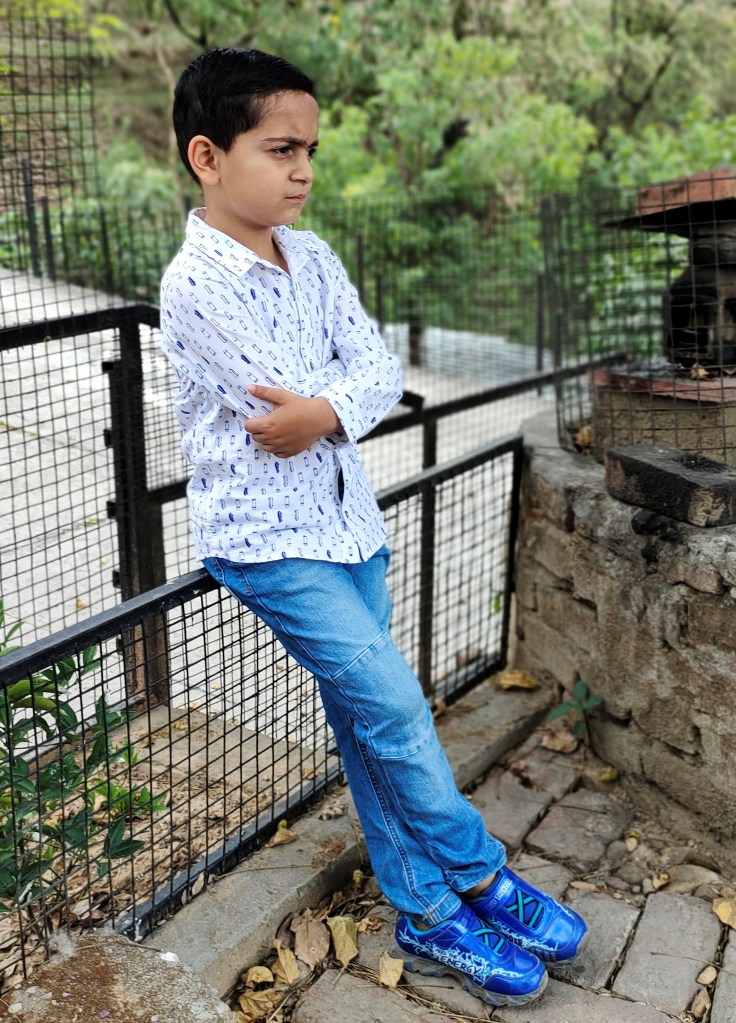
Natural consequences can also be used to teach problem-solving skills. Allow your child to face the natural consequences of their actions when appropriate. Just make certain that it is safe to do so.
Allow your child to spend all of their money during the first 10 minutes you’re at an amusement park, for example, if that’s what they want. Then, give them no spending money for the rest of the day.
This can spark a discussion about problem-solving techniques to help them make a better decision the next time. Consider these natural consequences as a teachable moment to aid in problem-solving collaboration.
They Are Filled With Strong Emotions.
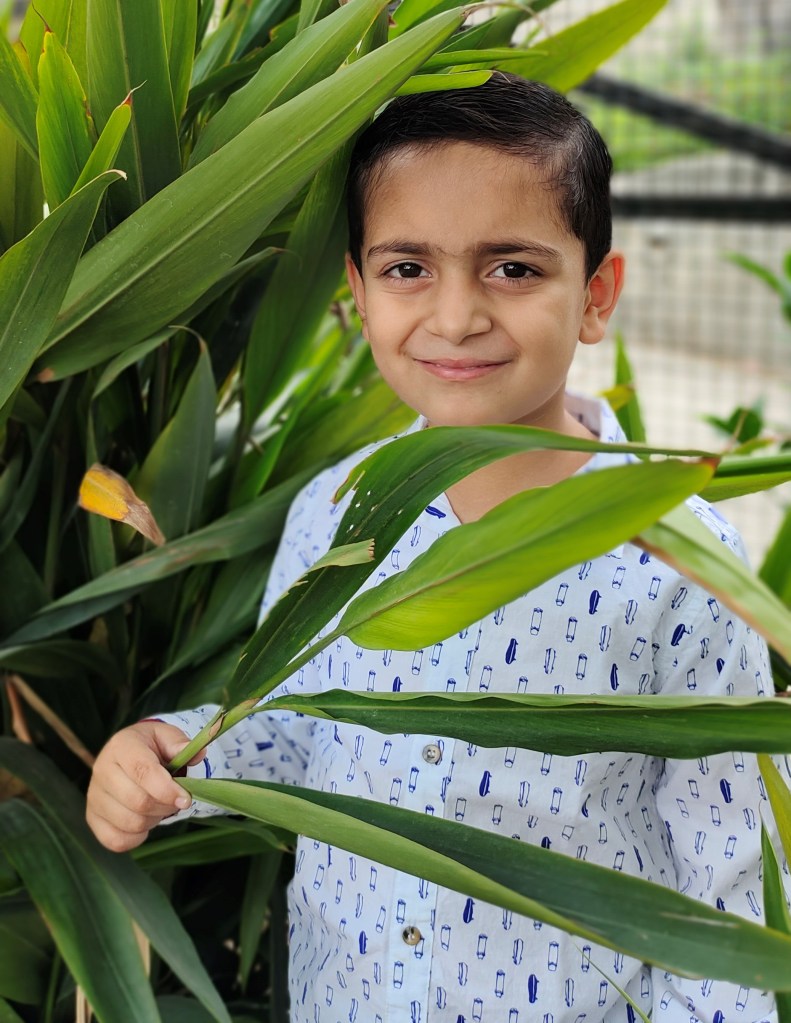
Sometimes children have no idea what to do with their emotions. When they are angry, they may become easily overwhelmed, and as a result, they may become aggressive. When they are excited, stressed, or bored, they may act out.
Children must learn healthy coping mechanisms for emotions such as sadness, disappointment, frustration, and anxiety.
Teach children about their emotions and show them healthy ways to manage them to keep them from misbehaving.
When children have better emotional control, they can use healthy coping skills to deal with their emotions. Instead of misbehaving to express their emotions, a child may learn to calm down by taking a time-out.
Children Should Be Taught How To Think Rather Than What To Think.
Discover more from Parth Sharma
Subscribe to get the latest posts sent to your email.
 Parth Sharma
Superb. Intricately written…👍
LikeLiked by 1 person
A Lot to teach train and also learn from children 🙂
LikeLiked by 1 person
Thank you so much for your valuable response. Yes true. Child care/Parenting is a lot more. And for that one article is not enough LoL. I’ll do my best to come up with more gradually.
LikeLiked by 1 person
Don’t take it too seriously 😃
LikeLiked by 1 person
A lovely and very interesting read.
I intend to send the link to some of my friends with kids and I wish every parent reads this without fail.
Thank you my friend.
All Photos are lovely, also those with the pets.
LikeLiked by 1 person
Very nice
LikeLiked by 1 person